Product News
February 24, 2026
Interview: Butte County Sheriff's Search & Rescue Uses QTAC Equipment to Help Save Lives
When a rescue call comes in, EMS and rescue teams need equipment that can keep up in tough terrain and unknown situations.

Published on:
August 20, 2026
Key Takeaways:
When emergency operations push past the pavement, safely transporting a patient becomes a major logistical challenge. For fire departments and EMS teams upgrading their off-road response capabilities, the most common question we receive is: How do you safely carry and secure a full-size stretcher or backboard in a UTV?
Achieving safe off-road patient transport comes down to two critical factors: choosing the correct rescue skid and understanding the boundaries of proper securement methods.
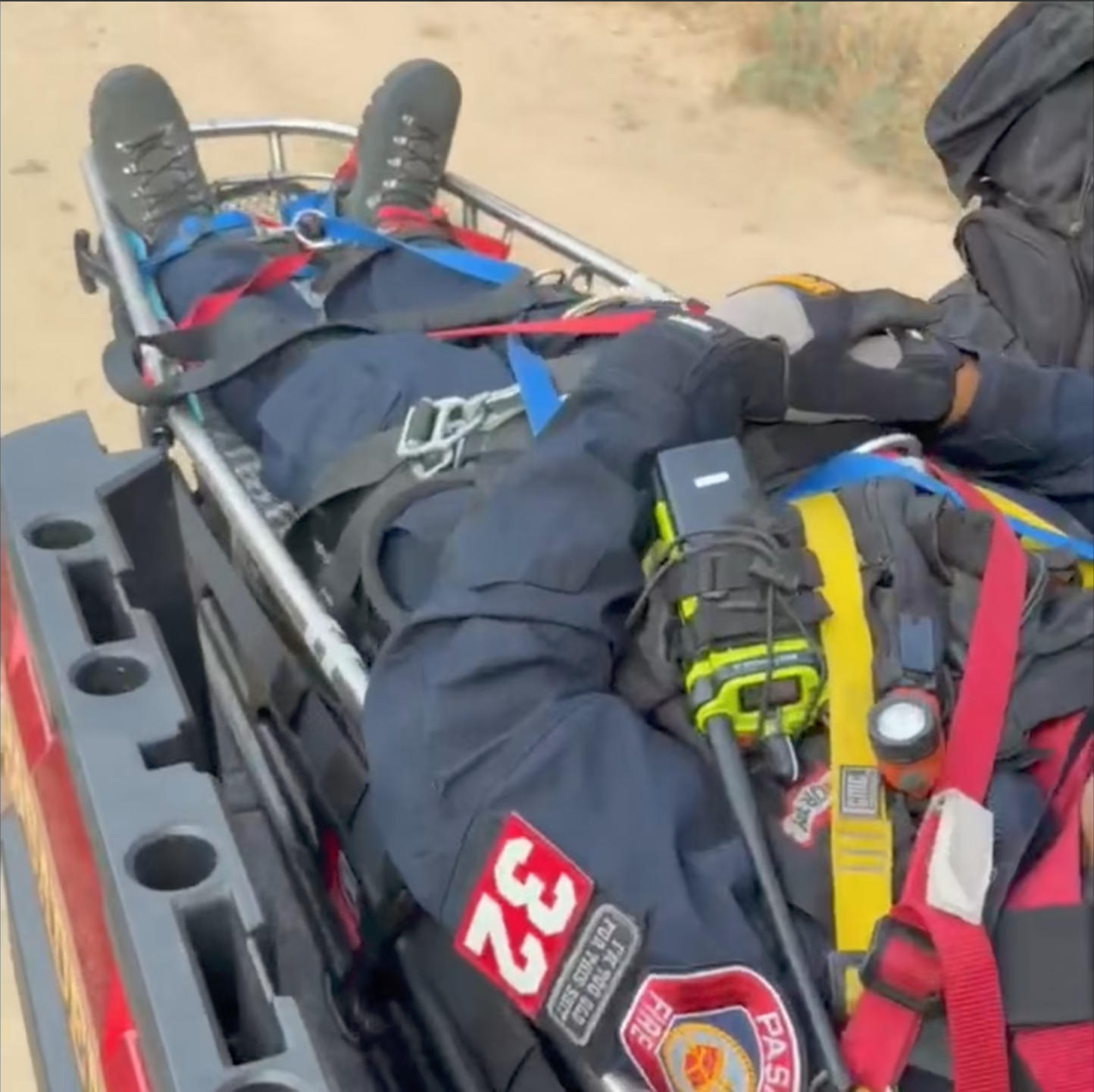
You cannot force the wrong equipment into a UTV bed. The type of skid you need is entirely dictated by your department's primary patient packaging method—whether that is a Stokes basket, a longboard, or a full-size gurney.
The second most common question we receive is how to properly secure a patient and their basket when using a UTV skid.
Important Liability and Safety Notice: The following information is provided for general informational purposes only and does not constitute medical, rescue, or operational advice. QTAC manufactures UTV skids; we do not provide medical direction, patient packaging protocols, or rescue training. The correct and legal way to secure a patient is strictly dictated by your Authority Having Jurisdiction (AHJ), your Standard Operating Procedures (SOP), your medical director, and the instructions provided by your litter and backboard manufacturers.
While standard industry practice generally follows a strict three-step hierarchy, QTAC only provides guidance on step three: securing the basket to our skid. Always consult your medical gear's manual and department SOPs for steps one and two:
Critical Securement Note: When executing step three, always secure your tie-downs around the base of the tie-down rail or handrail. Never tie off to the top of the rail, as this can cause sagging and structural damage over time.
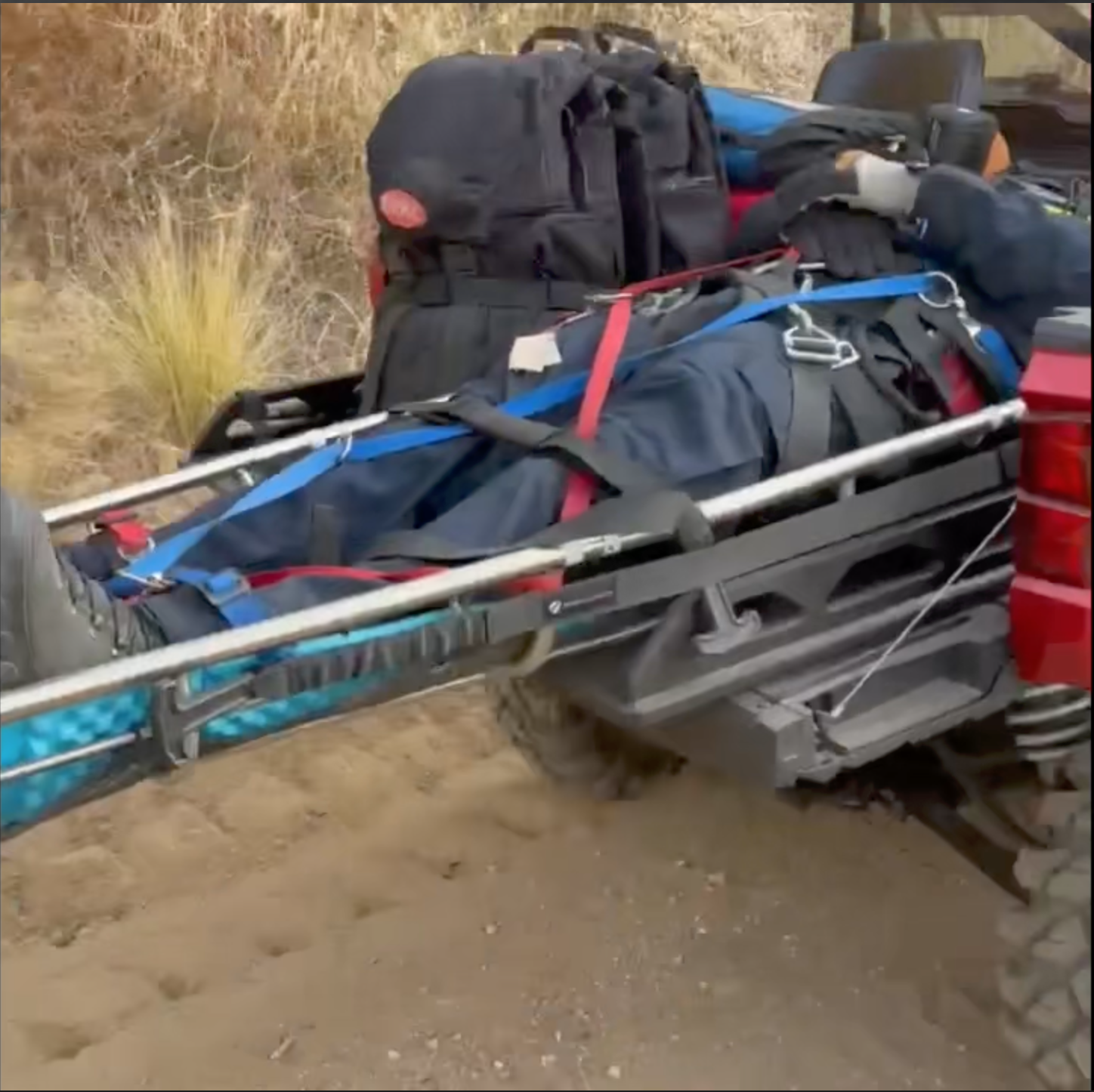
Improvised tie-offs, attaching to nonstructural rails, or taking shortcuts are never recommended. If your operation involves steep terrain, off-camber travel, or complex rescue environments, your team must be trained and equipped specifically for those conditions.
The Bottom Line: It is the sole responsibility of the department and its operators to ensure they are adequately trained in off-road patient transport and are using approved, load-rated restraint systems appropriate for their specific mission profile. Follow your SOPs, train extensively with the equipment you issue, and always rely on your AHJ for operational guidance.


