Product News
May 9, 2024
🎬 Video: Building the Ultimate Firefighter: The QTAC SUPER 3™ on a Ford F-550
Building the Ultimate Firefighter: The QTAC SUPER 3™ on a Ford F-550

Published on:
September 30, 2026
In the Field · Wranglerstar
How one landowner turned a stock pickup into an on-demand fire response — no dispatch required.

The irrigation ditch running through Wranglerstar’s property was always there. With a QTAC 125HP in his truck bed, it’s now a water supply. It’s his second QTAC unit, after running an 85-gallon skid on a trailer for a while already.
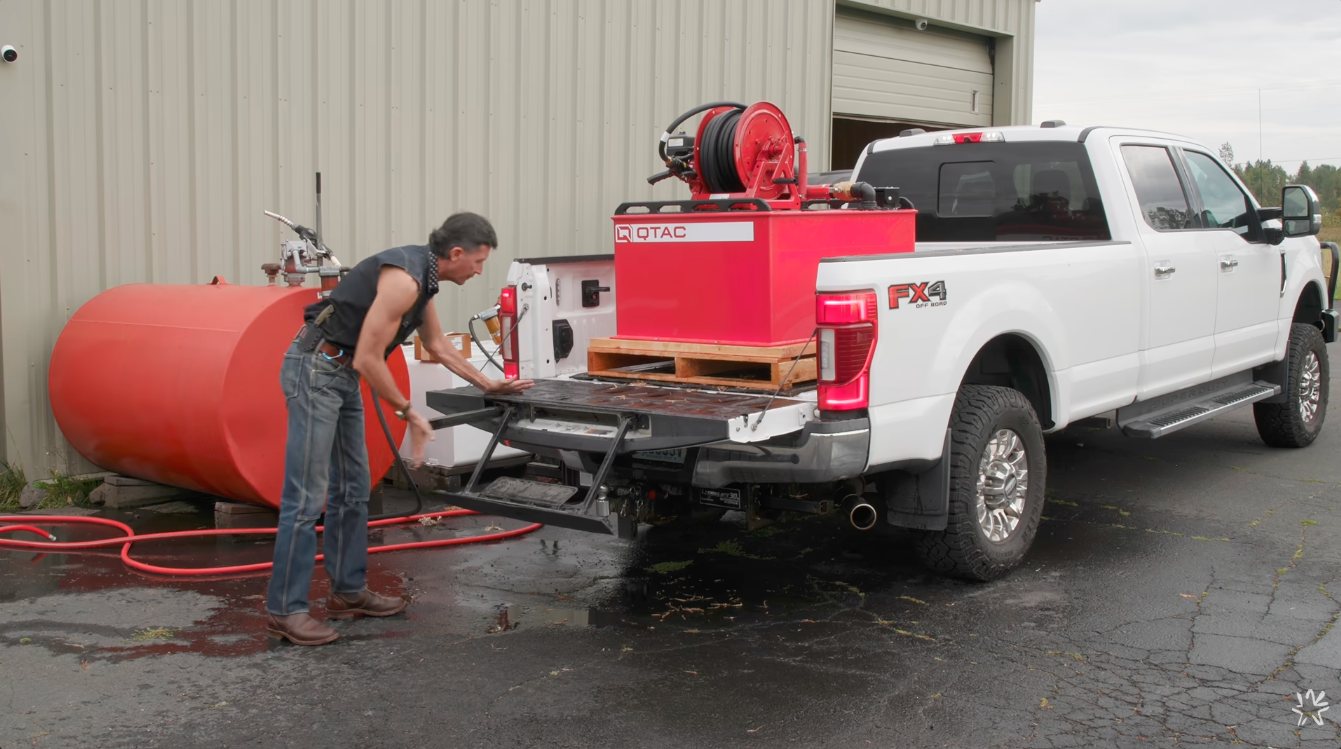
The 125HP went straight into a truck bed instead of a trailer — what Wranglerstar called, on camera, “basically a slip-in fire engine.” Out of the crate, the only real setup was fuel and a nozzle swap. Everything else was ready to go.
“Basically a slip-in fire engine.”
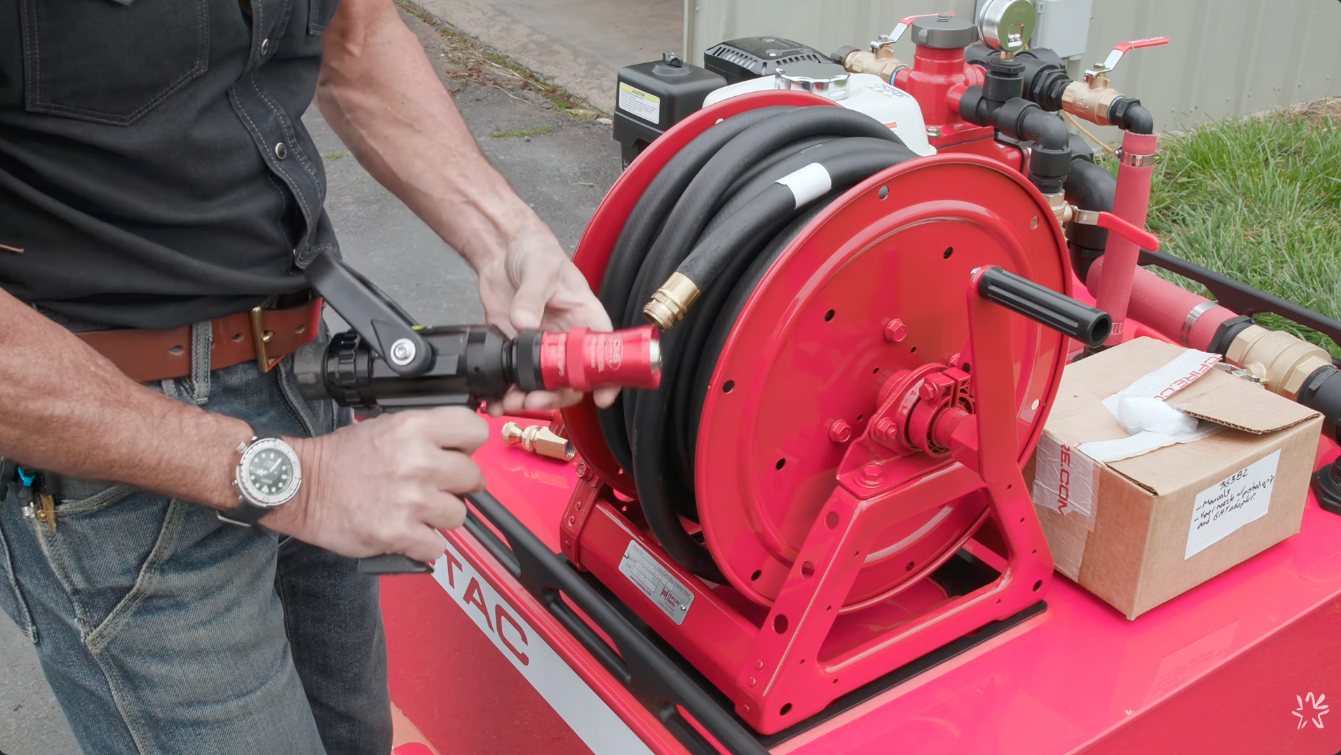
The 125HP ships with a standard brass bullseye nozzle. His first move was to replace it with the VIPER Nozzle — machined aluminum and plastic, rated for 10 to 23 gallons per minute, and adjustable from a circular fan to a straight stream. His is fitted with the optional pistol-grip bale shut-off, so he can hold the grip securely with one hand while adjusting the nozzle or bale with the other. Being able to switch from fan to stream without swapping tools is the kind of thing that matters more in the field than it sounds like on a spec sheet.
Every fire skid question eventually comes down to one thing: can the truck actually carry it? Wranglerstar ran his own numbers on camera — a one-ton crew cab, by his estimate, has roughly 3,000 pounds of payload once occupants are accounted for. The 125HP itself weighs 297 pounds dry and 1,340 pounds full of water. That leaves well over half the truck’s payload untouched, before even moving the load toward the rear axle. This isn’t a rig you have to plan a load around. It’s one you forget is back there until you need it.
The tank holds 125 gallons — plenty for a fast knockdown, not much for a sustained burn. But what happens when it runs dry? That’s what drafting is for: pulling water straight out of an open source instead of relying on the tank alone, using the optional Draft Hose Kit — a rigid, non-collapsible suction hose that won’t cave in under vacuum the way a soft hose would. Wranglerstar tested this by drafting from that same irrigation ditch.
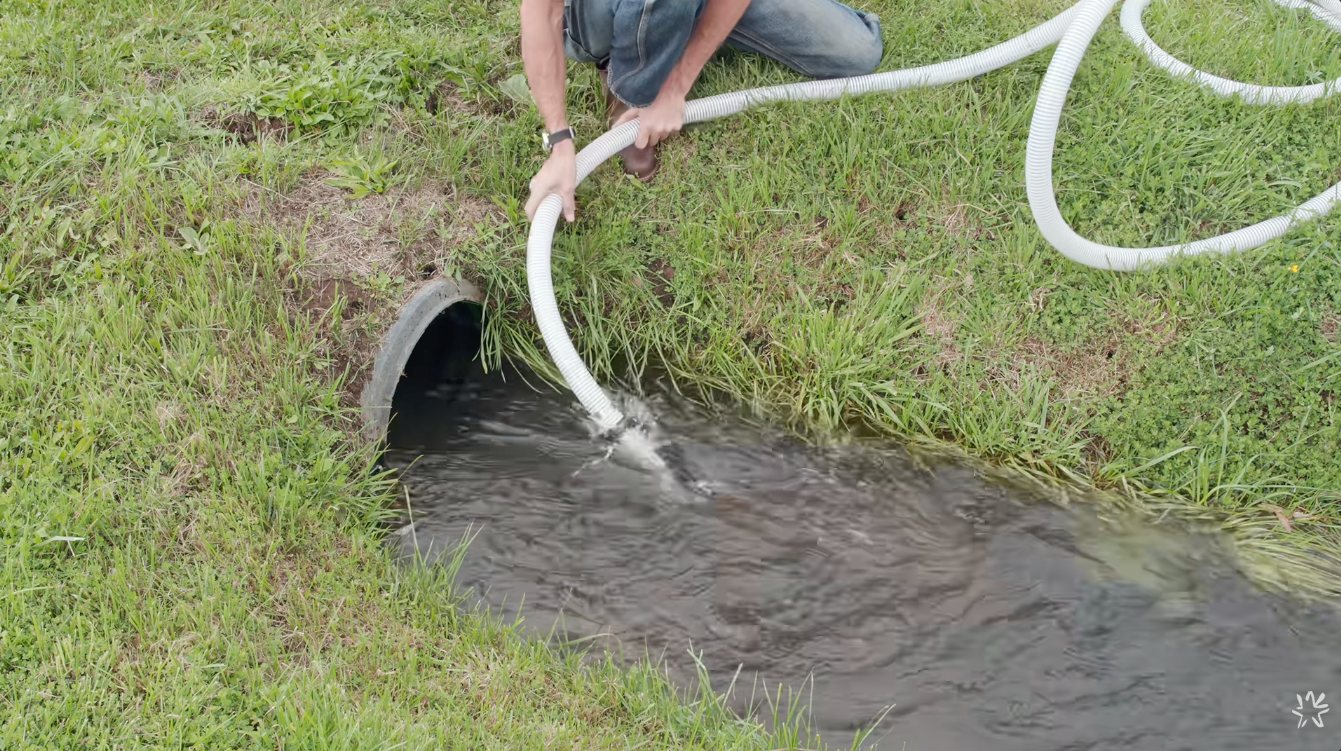
The physics here is fixed regardless of pump: atmospheric pressure alone puts a theoretical ceiling on suction lift at about 33.9 feet — the same limit any pump pulling a vacuum runs into. Actual usable lift depends on the pump and the setup; Wranglerstar, drawing from a source about 7 to 8 feet away, described 10 to 20 feet as workable range based on his own experience, well clear of what his draw needed.
Field note
Prefilling the hose before starting cut down noticeably on how much effort it took to get the pump primed. Once it caught, the 125HP could keep pumping for as long as there was fuel and water on the other end of the hose — ditch, pond, or stock tank, it doesn’t much matter which.
None of this changes what a fire department or a wildland crew brings to a real incident. What it changes is the gap before they arrive — or the situation where they’re already stretched across a dozen other calls that season. A recirculating valve lets the pump idle indefinitely without drying out, so it can run through a full duty cycle without babysitting. The same pump feeding the VIPER Nozzle can also push water through a standard 1-inch hose to a sprinkler line — one unit doing knockdown and structure protection without swapping equipment.
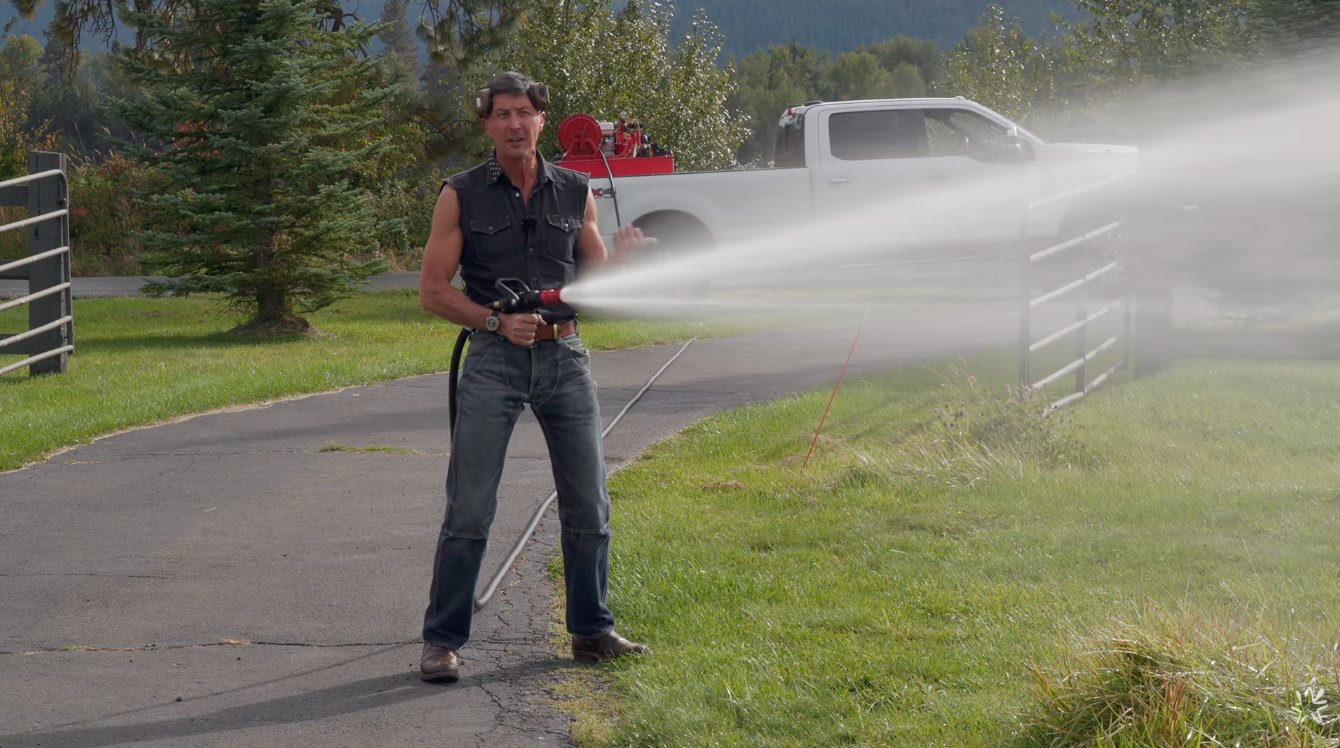
Wranglerstar’s own read, on camera, was straightforward: wildfire risk isn’t going down, and the resources people have leaned on aren’t guaranteed to stretch as far as they used to. A skid unit like this doesn’t replace preparedness. It’s one more piece of it.
As long as the pump can draft from an open water source — a pond, ditch, or tank — through the optional Draft Hose Kit, it can keep pumping indefinitely, limited only by fuel and access to water.
The theoretical maximum, based on atmospheric pressure alone, is about 33.9 feet. Actual usable range depends on the specific pump and setup — Wranglerstar described 10 to 20 feet as workable, based on his own experience.
The 125HP ships with a standard brass bullseye nozzle. The VIPER Nozzle is machined aluminum and plastic, rated for 10 to 23 GPM, and adjusts from a circular fan to a straight stream. An optional pistol-grip bale shut-off lets the operator hold the grip with one hand while adjusting the nozzle or bale with the other.
Not typically. At 1,340 pounds full of water, it comes in well under the usable payload of most one-ton trucks, even after accounting for crew and gear.
Questions about the 125HP?Call 866-308-6699 or email sales@qtacfire.com
See the 125HP →


